30 Jun 2026 ● Andre Boeke
Why Recruiting Early Talent Is Key To Your Company's Success In 2026
If you are reading the E4S Recruiter blog then, chances are, you are already looking to recruit early talent to your company. But just in case you are in any doubt about the benefits to recruiting young people, read on to explore the advantages.
The employment landscape continues to evolve at a remarkable pace.
Rapid technological advancement, changing employee expectations and ongoing skills shortages mean that, as an employer, you could be under increasing pressure to secure the talent you need for long-term future success.
And while experienced professionals obviously remain valuable assets, many organisations are recognising that one of the smartest investments they can make is in recruiting early talent.
Early talent refers to young people who are at the beginning of their careers, which includes school leavers, apprentices, college students, university graduates, interns and anyone else entering employment for the first time.
These young candidates may have limited professional experience. But what they lack in experience, they often make up for with enthusiasm, adaptability, fresh perspectives and a willingness to learn.
Across sectors including healthcare, construction, engineering, manufacturing, digital technology, finance, retail and the public sector, employers are increasingly viewing early talent recruitment as a strategic business priority rather than simply a way of filling junior vacancies.
Building a sustainable workforce starts with investing in the next generation.
Addressing the UK's Skills Shortages
We have written in the past about the skills shortage by asking can employers do more to help bridge the UK skills gap?
And still, one of the biggest challenges facing UK employers in 2026 is the ongoing shortage of skilled workers.
Many industries continue to struggle with vacancies that remain unfilled for months. Factors contributing to this include demographic changes, lower levels of migration in some sectors, increased competition for skilled professionals and rapid technological change that constantly creates demand for entirely new skill sets.
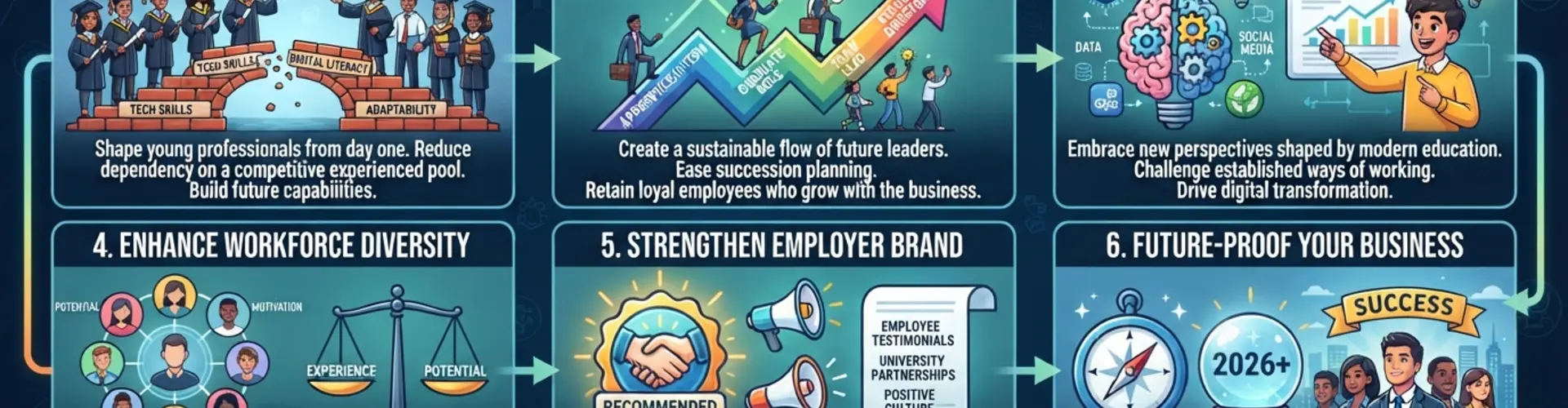
Hiring early talent can allow you to shape young people from the beginning of their careers, ensuring they develop the exact technical skills required by your company.
Rather than competing for a limited pool of experienced workers, you can start to build your own future workforce by recruiting young talent.
Building A Long-Term Talent Pipeline
Recruiting early talent means you can go on to create a sustainable pipeline of future employees who can progress through your business over many years.
Whether students, graduates or school leavers, young people can learn new skills, gain professional qualifications and move into more senior roles as they progress through their career.
If you have a policy in place that provides a well-managed early careers programme, this can ensure that as experienced employees retire or move on, you have capable younger staff who are ready to step into those more senior roles.
Succession planning can become far easier when your company consistently invests in developing junior employees.
Early Talent Brings Fresh Ideas
Young professionals enter the workplace with new perspectives shaped by modern education, digital technologies and evolving customer expectations.
Younger people are often comfortable with:
- Artificial intelligence tools
- Data analysis
- Social media
- Digital collaboration
- Cloud-based software
- Emerging technologies
- Sustainability thinking
Rather than questioning why change is happening, early talent often embraces innovation naturally.
Their willingness to challenge established ways of working can help you to identify more efficient processes, improve customer experiences and introduce new ideas.
Innovation often comes from combining experienced employees' knowledge with the creativity of younger recruits. This in turn gives you a more diverse workplace.
Greater Adaptability In A Changing Workplace
Whichever field you work in, you have no doubt found that your workplace is changing faster than ever.
- Artificial intelligence, in particular, continues to transform many job roles
- Automation is removing repetitive tasks
- Hybrid working has become standard across many industries
- Digital transformation affects almost every sector
Young talent that is entering the workforce today has typically studied using modern technologies and collaborative digital platforms throughout their education.
They are generally comfortable learning new software, adapting to changing processes and acquiring new skills quickly. For you as an employer, this adaptability can provide a significant competitive advantage.
Rather than needing to retrain staff who have established habits developed over many years, early talent often learns company-specific systems from the outset.
Young Talent Can Provide A Strong Return On Investment
Although developing early talent requires investment in training and mentoring, the long-term return for you can be substantial.
Employees who begin their careers within an organisation frequently demonstrate greater loyalty than experienced hires who change employers regularly.
The benefits to investing in young talent include:
- Lower recruitment costs
- Reduced agency spending
- Lower turnover
- Stronger organisational knowledge
- Better succession planning
- Higher employee engagement
Replacing experienced employees can cost thousands of pounds once recruitment, onboarding and lost productivity are taken into consideration.
And so, retaining early talent over many years delivers significant financial value.
Supporting Workforce Diversity
If you are looking to grow a more diverse workplace, early talent recruitment provides you with an excellent opportunity to improve your workforce diversity.
Build a presence with and engage with: schools, colleges, universities and apprenticeship providers so that you can come into contact with your people from a much wider range of backgrounds.
Removing unnecessary experience requirements enables you to be able to recruit based on:
- Potential
- Motivation
- Aptitude
- Learning ability
- Values
- Cultural contribution
This approach can help you to create more inclusive workplaces where your young staff have equal opportunities regardless of their previous employment history or experience.
A diverse workforce has repeatedly been linked to improved innovation, better decision-making and stronger business performance.
Strengthening Employer Brand
Good employer branding can help you to stand out from the crowd. And today's young job seekers carefully research employers before applying for vacancies.
They want to work at organisations that invest in employee development, provide meaningful work and offer genuine career progression.
Companies with strong early careers programmes often develop positive reputations among students, graduates and education providers. This benefits you for future recruitment drives because you will have more young talent already wanting to work for you.
Successful apprenticeship schemes, graduate programmes and internship opportunities generate positive employer branding through:
- Employee testimonials
- Social media content
- University partnerships
- School engagement
- Careers fairs
- Local community involvement
A strong employer brand helps you to attract not only early talent but experienced professionals as well.
People want to work for businesses that are known for investing in their employees.
Boosting Staff Retention
Younger people who start their careers within an organisation often develop stronger emotional connections with their employer. This is because they build relationships over time and they understand the company culture.
They experience internal promotions and feel invested in the company’s or organisation's success.
When you provide structured development opportunities, mentoring and clear progression pathways, this increases the likelihood that young talent will remain with the business for many years.
While retention can never be guaranteed, studies show that young employees who receive significant investment from their employer often show greater commitment in return.
Closing The Digital Skills Gap
Whatever sector you are working in, you will know that your workplace is increasingly reliant on digital systems.
Many younger recruits have grown up using digital technologies throughout their education and daily lives.
At varying levels, many of them will possess strengths in:
- Digital communication
- Data interpretation
- AI-assisted productivity
- Cyber awareness
- Online collaboration
- Content creation
- Digital research
Although technical training will remain essential, your early talent recruits will often arrive with strong digital confidence and this can accelerate organisational transformation.
Supporting Innovation Through Reverse Mentoring
Many employers are now adopting reverse mentoring programmes. We have written in the past about the benefits of this in an article about new age mentoring.
Traditionally, experienced employees mentor junior colleagues. But with reverse mentoring, younger employees are given the opportunity to share knowledge in areas such as:
- Emerging technology
- Social media
- Artificial intelligence
- Consumer trends
- Digital communication
- New workplace expectations
This creates valuable two-way learning.
Senior leaders gain fresh perspectives while early talent develops confidence and leadership skills and feels more valued.
The result can mean a more collaborative learning culture across your workplace.
Apprenticeships Continue To Grow
One of the great ways of attracting early talent to your workplace is by offering Apprenticeships.
Apprenticeships remain one of the UK's strongest routes into employment.
Across sectors, both employers and young people are increasingly recognising that apprenticeships provide an excellent balance between structured learning and practical workplace experience.
Apprentices develop technical expertise while contributing productively to the organisation from an early stage.They also then benefit from gaining nationally-recognised qualifications.
For you as an employer, apprenticeships offer opportunities to shape future specialists according to your business needs rather than relying on external recruitment.
And the good news is, Government support and continued employer investment mean apprenticeships remain a cornerstone of workforce planning in 2026.
Preparing For An Ageing Workforce
Are you operating in an industry that is experiencing significant numbers of experienced employees approaching retirement?
This creates both risks and opportunities.
Without younger employees entering the workforce, valuable knowledge can disappear when your long-serving staff leave.
Recruiting early talent gives you the opportunity to establish knowledge transfer between experienced employees and your newer recruits.
Mentoring, shadowing and structured development programmes ensure essential expertise is passed on before your older staff retires and this can give you continuity.
Meeting Customer Expectations
If you have a diverse customer base, you also need a diverse employee base to help you to meet customer expectations. Customers increasingly expect businesses to understand changing lifestyles, communication preferences and emerging technologies.
Younger employees often bring valuable insights into new consumer behaviours, digital engagement and evolving market trends. This gives you the chance to tap into new customer bases..
Their perspectives can influence:
- Marketing campaigns
- Customer service
- Product development
- Social media strategy
- Digital experiences
- Brand positioning
Combining experienced commercial knowledge with younger consumer insights enables you to remain competitive in rapidly changing markets.
Young Talent Enhances Company Culture
A workforce made up entirely of experienced employees may unintentionally become resistant to change.
Introducing early talent creates opportunities for continuous learning across your company.
Young employees often bring:
- Curiosity
- Energy
- Optimism
- Collaboration
- Creativity
- Enthusiasm
These qualities can contribute positively to workplace culture.
At the same time, your more experienced staff can provide guidance, stability and professional expertise.
Together, these different perspectives can create well-balanced, high-performing teams that can ensure your company’s continued success.
Developing Future Leaders
Today's apprentices and graduates could become tomorrow's company directors.
Leadership development can begin early. Providing early exposure to responsibility, mentoring, project work and professional development gives you the opportunity to identify high-potential recruits right from the beginning of their careers.
Rather than searching externally for future leaders, you can develop management capability internally over many years.
When you have a team of staff who have progressed internally, they will have stronger company and industry knowledge and greater alignment with company values.
The Competitive Advantage Of Investing Early
While recruiting experienced professionals will always remain important, when you invest consistently in early talent, this can create a sustainable competitive advantage.
Having this strategy means:
- You build stronger leadership pipelines
- You improve staff retention
- You enhance innovation
- You strengthen company culture
- You reduce recruitment costs over time
Most importantly, this strategy creates workforces that are capable of adapting to whatever challenges the future brings.
If you are looking to recruit early talent to your workplace, contact us at e4s for details about how we can help.