31 May 2026 ● Andre Boeke
How Employer Brand Ambassadors Can Create Compelling Content to Recruit Young People
If you read our recruitment articles, it is likely you are an employer who is looking to hire school leavers, students or graduates to your company. Whether for part time jobs, seasonal roles, Apprenticeships or graduate programmes, recruiting young people has changed dramatically over the past decade.
Traditional job adverts and corporate recruitment campaigns no longer carry the same influence they once did.
And whilst you do need a great job ad, younger candidates - particularly those from Gen Z and younger millennials - will be looking for authenticity, transparency and relatable communication from your company before they decide whether your role is worth their time.
This can be done via effective employer branding. And, if it is a route you have considered previously, one great way of attracting the attention of younger candidates is by appointing employer brand ambassadors.
What Are Employer Brand Ambassadors?
Employer brand ambassadors are employees, apprentices, graduates, managers or company representatives who actively promote the organisation through real experiences and genuine storytelling.
When used effectively, employer brand ambassadors can become one of your most powerful recruitment tools, especially when trying to attract young talent.
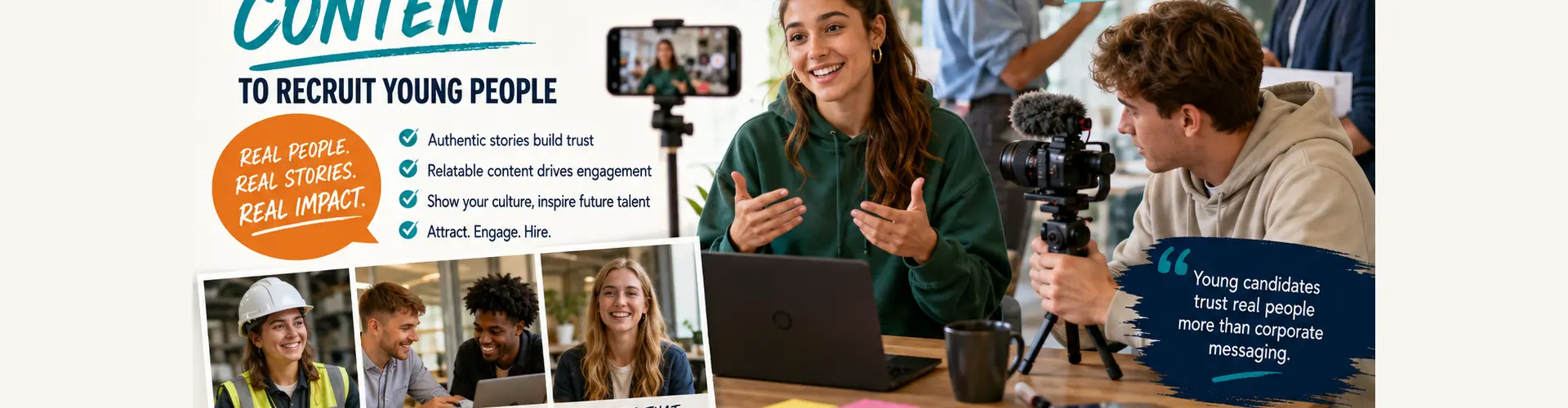
Young jobseekers are highly influenced by the content they consume online. They trust real people more than polished corporate messaging.
A carefully edited recruitment video created entirely by a marketing agency may look professional but it can sometimes lack credibility in the eyes of younger candidates.
In contrast, a short video of a young person on one of your apprenticeships, for example, explaining what their first month has been like can generate a lot more engagement and trust. It’s real.
As an employer trying to attract young talent, the challenge is no longer simply posting your job vacancies.
The challenge is to be able to create content that feels human, useful, engaging - and, most of all - believable!
Why Young People Respond To Ambassador Content
Young candidates have grown up in a digital-first environment.
Social media means they are used to seeing influencer content, behind-the-scenes videos, employee stories and peer recommendations every day on platforms such as TikTok, Instagram, YouTube and LinkedIn.
If you have never employed the strategy of using brand ambassadors, this is where the challenge can lie for you.
Because of their familiarity with videos and Reels, young people can quickly recognise overly-scripted or artificial recruitment messaging.
They are more likely to engage with content that feels spontaneous, relatable and personal. And this is the type of brand ambassador content you need to create.
Employer brand ambassadors help bridge the gap between the organisation and potential applicants because they provide:
- Real-life insight into the workplace
- Honest accounts of career development
- Social proof that employees enjoy working there
- A more approachable image of the company
- Representation of different backgrounds and personalities
Especially if they have little or no previous work experience, it can be difficult for young candidates to picture themselves in your workplace and where they might fit into the set up.
Using brand ambassadors means your potential young candidates can see themselves reflected in your workplace before applying.
If your ambassador content includes your apprentices, graduates, young professionals and employees from diverse backgrounds, your potential candidates are more likely to believe the organisation is inclusive and welcoming.
Choosing The Right Employer Brand Ambassadors
So, how do you go about choosing your brand ambassadors?
Not every employee will be suited to ambassador work. Although you might want to include some senior staff members, these are not necessarily your best ambassadors.
In many cases, younger members of your team or recent recruits are the most effective because their experiences are fresh and relatable to your target audience.
And many of them will have made videos for their own social media accounts - so they will be comfortable filming themselves.
Strong brand ambassadors tend to have:
- Good communication skills
- Confidence on camera or online
- Enthusiasm for the organisation
- Authentic personalities
- Strong understanding of company culture
- Willingness to engage with others
Try to avoid selecting ambassadors solely based on job title or seniority.
Young candidates are often more interested in hearing from someone close to their own age who recently joined the business rather than from an older director delivering formal corporate messages.
A graduate trainee discussing how they adapted to working life can be more influential than a highly polished executive presentation.
Authenticity Matters More Than Perfection
Young audiences usually prefer authenticity over perfection so try to resist the urge to perfect your brand ambassador videos.
Heavily scripted content can sometimes reduce engagement because it feels staged - so encourage your brand ambassadors to speak freely and naturally so that their personality shines through.
There can be a framework you want them to follow. For example, you coıuld encourage your brand ambassadors to explain:
- What surprised them about the role
- What they enjoy most about the workplace
- What challenges they have overcome
- What support they received when starting
- What their normal working day looks like
These types of insights feel genuine and useful to young jobseekers - your potential new recruits.
Using Video Content Effectively
Video content is currently one of the most effective recruitment tools for reaching younger audiences.
Short-form video, such as Instagram Reels and You Tube Shorts, especially performs well because it matches the way younger people consume information online.
Employer brand ambassadors can create engaging recruitment videos by focusing on topics such as:
- “Day in the life” content
- Workplace tours
- Apprenticeship experiences
- Graduate programme insights
- Team introductions
- Career progression stories
- Workplace culture clips
- Myth-busting videos about certain industries
A “day in the life” video can be particularly powerful because it helps young people visualise themselves in the role and in your workplace. As mentioned above, many young candidates, particularly recent school leavers, have limited workplace experience so showing the daily reality of a job can reduce uncertainty and encourage applications.
Videos should generally be:
- Short and engaging
- Mobile-friendly
- Easy to understand
- Captioned for accessibility
- Informal in tone
- Visually dynamic
Attention spans online are short. The first few seconds are especially important. Your brand ambassadors should aim to capture attention quickly with energy, humour, honesty or an interesting insight.
Don’t forget, some of your younger existing staff members could already be familiar with making short form videos so they will already feel comfortable with this.
They could even come up with some content ideas of their own, giving them more ownership of their video.
Highlighting Career Development Opportunities
When deciding which roles to apply for, young people are often highly motivated by future career development opportunities.
Many candidates are not only asking “What is this job?” but also “Where could this role lead me?”
Employer ambassadors can create content with this in mind. Content that demonstrates progression opportunities.
This could include:
- Stories about promotions
- Learning and development experiences such as training days or specific courses
- Mentoring opportunities
- Qualifications gained through work
- New responsibilities over time
- Career journeys inside the organisation
For example, an employee explaining how they progressed from apprentice to supervisor within three years creates a great - and true - success story.
It gives young candidates evidence that, as an employer, you invest in young people and reward their efforts.
Career progression content is particularly important in industries that younger audiences may see as lacking opportunity.
Displaying Workplace Culture Honestly
Job satisfaction is as important as salary for any young people, these days, and workplace culture is something they will look at closely before deciding whether or not to apply for vacancies.
They want to know:
- Will I fit in?
- Will I feel supported?
- Will I enjoy working here?
- Do employees seem happy?
- Is the environment inclusive?
Employer ambassadors can answer these questions more effectively than recruitment brochures.
Good culture-focused content can include:
- Team activities
- Charity events
- Training sessions
- Collaborative working environments
- Employee celebrations
- Flexible working discussions
- Wellbeing initiatives
However, honesty is important.
Your younger audiences will be highly sceptical of exaggerated workplace claims.
If an organisation promotes itself as relaxed and flexible but employees appear uncomfortable or scripted, young candidates will see through this.
The most effective ambassador content presents workplace culture realistically rather than pretending every day is perfect.
Imperfections are real and having these on display whilst also highlighting how you work to overcome these challenges is more appealing than glossing over any issues.
Encouraging Employee Storytelling
Storytelling is one of the strongest tools in recruitment marketing because people naturally connect with stories more than statistics. Workplace stories will mean more to potential young recruits than a list of facts and figures.
Strong recruitment storytelling can include testimonials such as:
- What the employee expected before joining
- What challenges or concerns they had
- What their experience has actually been like
- What they have learned or achieved
- Why they would recommend the organisation
These types of video help potential candidates emotionally connect with the content.
For example, an apprentice explaining that they were nervous about entering the workplace but quickly found support from colleagues creates a relatable narrative for other young people facing similar fears.
Using Social Media Strategically
Not all social media platforms are the same. Where possible, try to have different content styles on each platform.
TikTok & Instagram
TikTok and Instagram are ideal for:
- Short videos
- Behind-the-scenes content
- Workplace humour
- Quick employee interviews
- Trend-based recruitment content
Young audiences on these platforms generally prefer informal and entertaining content.
LinkedIn is more suited to:
- Career development stories
- Professional achievements
- Graduate success stories
- Industry insights
- Longer-form recruitment posts
Content here should still feel human but can be more professionally focused.
YouTube
YouTube works well for:
- Longer employee interviews
- Workplace documentaries
- Detailed apprenticeship explainers
- Career advice content
- Industry education videos
Allowing Young Employees to Lead Content Creation
For that ultimate authenticity, one of the best strategies is allowing younger employees to come up with their own ideas for recruitment messaging.
Many companies and organisations can struggle to connect with younger audiences because older, senior leaders control the tone too heavily.
Your younger employees will often understand current trends, platform behaviour, humour and communication styles for each platform far better.
Giving ambassadors creative input can improve authenticity significantly - and it is also a perfect opportunity to give some responsibility to younger team members, making them feel valued.
This does not mean removing oversight entirely. You should still provide guidance on professionalism, safeguarding, confidentiality and brand standards. Offer a framework and work collaboratively. But bear in mind that excessive control can weaken content.
Young ambassadors often know what younger candidates actually want to see and you can work to find a balance.
Answering Real Questions From Young Candidates
Especially with young candidates, there is likely to be lots of uncertainty surrounding the world of work. And, naturally, this raises a lot of questions for them. Brand ambassadors can create content that takes away that uncertainty and worry.
Again, younger employees will be familiar with these worries and will be able to come up with suggestions for what to include.
In general, young jobseekers frequently worry about issues such as:
- Their lack of work experience
- Workplace confidence
- What will be expected from them in interview
- Balancing work and study
- Career direction
- How they will fit into the professional environment
Employer ambassadors can create content that directly addresses these concerns.
For example:
- “What I wish I knew before starting…”
- “How I handled my first interview.”
- “What training I received in my first month”
- “How the company supported my development”
- “The biggest misconception about this industry”
This type of content feels practical and supportive rather than purely promotional.
Diversity & Representation In Ambassador Content
As we have said in previous articles, young candidates increasingly expect employers to demonstrate diversity and inclusion in visible ways - so many will research your company with regards to this before deciding whether or not to apply for a position.
Try to make sure your brand ambassadors are people from different:
- Age groups
- Ethnic backgrounds
- Religious backgrounds
- Educational routes
- Genders
- Socioeconomic backgrounds
- Career paths
Representation matters because candidates want evidence that opportunities are genuinely open to people like them.
However, the diversity in your programmes must be authentic. Your young audiences will be highly alert to tokenism or forced representation.
Make sure you have real employees who are your brand ambassadors.
How To Measure Which Ambassador Brand Content Is Working
Ambassador content performance doesn’t need to be guesswork when it comes to deciding whether or not it is working. There are different metrics to look at to work out what is appealing to young audiences.
Useful metrics include:
- Video views
- Engagement rates
- Comments and shares
- Click-through rates
- Application numbers
- Application quality
- Careers page traffic
- Social media follower growth
You can also encourage feedback from applicants as this is valuable. You could ask questions such as:
- What content influenced your application?
- Which ambassador videos stood out for you?
- Which information did you find the most useful?
Studying these metrics will allow you to drill down and refine your recruitment strategy over time.
How To Train Your Employer Brand Ambassadors
Yes, you want natural videos and content that doesn’t sound contrived or scripted - but even the most natural communicators benefit from guidance and support.
Training tips for your brand ambassadors can include:
- Social media best practices
- Brand guidelines
- Online professionalism
- Recruitment objectives
- Content planning
- Video presentation skills
- Legal and confidentiality issues
Obviously, the goal is not to make your brand ambassadors sound robotic. The goal is to help them communicate clearly, confidently and responsibly.
And acknowledging that you appreciate that creating content takes effort by rewarding your brand ambassadors in some way means they will feel valued rather than exploited.
Building Long-Term Recruitment Trust
The strongest employer brands are built over time through consistency.
As we have said, young people increasingly research employers before deciding whether or not to apply for a role.
Many will watch multiple videos, read employee comments, browse social media accounts and review workplace culture online before making decisions.
If you have consistent brand ambassador content, this can help to build long-term trust and familiarity.
When young candidates repeatedly see real employees discussing positive experiences, development opportunities and workplace support, your company will become more attractive and credible for them.
This credibility is difficult for competitors to replicate through traditional advertising alone so content like this can help you to stand out from the crowd.
Summing Up
Employer brand ambassadors have become one of the most effective ways to recruit young people because they provide something today’s school leavers, students and graduates value deeply: authenticity.
Young jobseekers want to hear from real employees, see genuine workplace experiences and understand what life inside your company is actually like.
Carefully scripted corporate messaging is far less persuasive than honest storytelling from relatable brand ambassadors.
Get your brand ambassador content right and this could help you stand out from the crowd and attract top young talent to your company.