12 Feb 2026 ● Chris Eccles
National Apprenticeship Week 2026: Why the RAF is a Great Career Launchpad
It’s National Apprenticeship Week 2026 and if you’re currently scrolling through job boards wondering if there’s a career out there that offers more than a swivel chair and a lukewarm latte, you’re in the right place.
At e4s, we’ve seen every kind of student job and apprenticeship you could possibly name. But few offer the blend of high-end tech, global travel and community spirit found in the Royal Air Force (RAF).
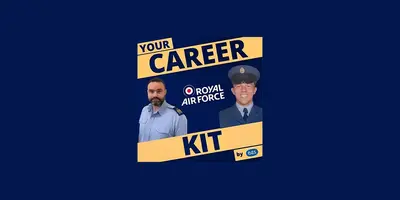
To give you the inside track, we’re turning to Edward Nussey-Waite, a Cyberspace Communications Specialist who has spent the last few years proving that ‘joining the military’ doesn’t just mean marching, it means mastering the technology that keeps the world connected.
Breaking the ‘Military Family’ Myth
A common misconception among students is that you need a family tree full of Generals to even consider the RAF. Edward is living proof that isn’t the case.
“I don’t come from a military background,” Edward says. “I’m actually the first in my family to join the Armed Forces. While I didn’t have any direct inspiration from family members, I was always interested in technology and wanted a career that offered a career within that field. The RAF stood out to me and I’ve never looked back since joining.”
If you’re worried about the recruitment process, Edward’s advice is simple: “Relax, take a chill pill.” He says that the recruiters are there to help you succeed, not trip you up.
From Civilian to Cyber Specialist: The Training Journey
When you start an apprenticeship with the RAF, you aren’t just a student; you’re an earner from day one. You move through Initial Training (learning the military essentials) and then onto Specialist Trade Training.
For Edward, specialist training took place at No.1 Radio School, where he transformed from a tech enthusiast into a Cyberspace Communications Specialist.
What exactly does a Cyberspace Communications Specialist learn?
Networking: Building and maintaining secure data links
Hardware: Managing servers, computers and complex radio systems
Problem Solving: Learning how to fix critical infrastructure under pressure
“I learned how networks, computers, servers and radios worked – and how to fix them,” Edward explains. “I felt well-prepped going into my first posting, there was still plenty to learn on the job, however all the basics I learned from Phase 2 set me up well.”
The Day-to-Day: More Than Just ‘IT Support’
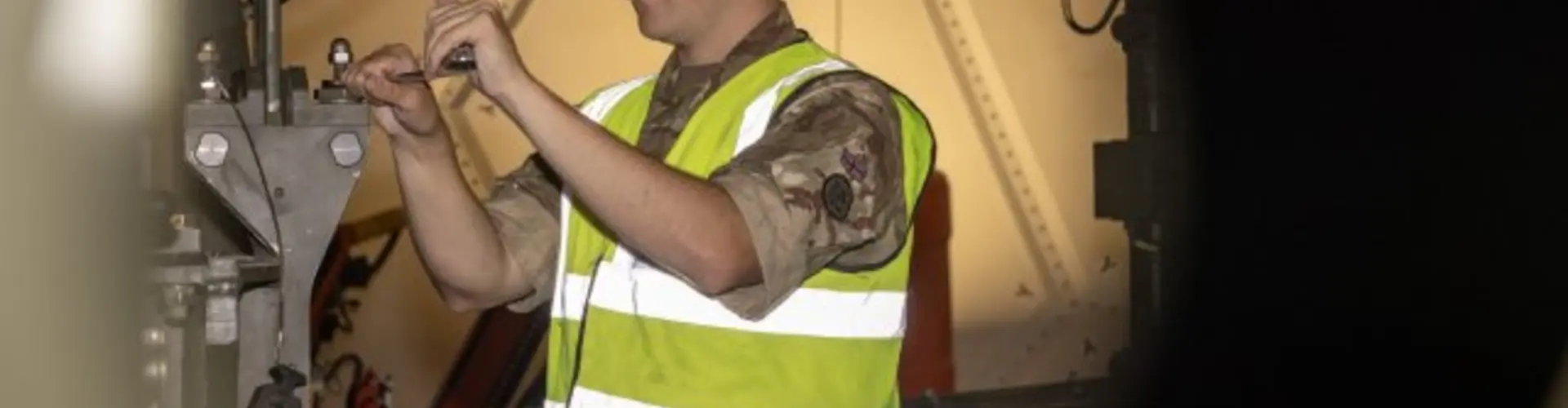
In the civilian world, ‘IT support’ might mean resetting passwords in an office. In the RAF, it means keeping a Typhoon jet connected to its base or maintaining the LTR-25 deployable radar system.
Edward’s career has already seen him stationed at:
RAF Coningsby: Working on deployable servers & comms
RRH Staxton Wold: Maintaining long-range radar
RAF Cosford: Currently serving as an instructor to the next generation
A typical day for Edward looks like this:
System Checks: Ensuring the radar is running at 100% capacity
Fault Finding: Troubleshooting technical glitches in real-time
Team Collaboration: Coordinating with engineers to ensure ‘the kit’ is always ready for deployment
“Without comms, nothing else can really happen,” says Edward. “We help keep everyone connected, whether it’s on base or out on deployment, so the rest of the mission can run smoothly.”
Travel, Sports and ‘Rocket League’
One of the biggest draws of an RAF apprenticeship is the lifestyle. While your mates at uni might be struggling with rent and food shopping, Edward has been traveling the world and pursuing his passions.
Global Detachments
And Edward hasn’t just stayed in the UK. His role has taken him to:
The Falkland Islands: A 3-month stint supporting Typhoon operations
Cyprus: 4 months on Op Shader, supporting ongoing international operations
Germany & Austria: For competitive esports and Adventurous Training
Esports and Leadership
One of the coolest parts of Edward’s story is his involvement in RAF Esports. He manages the RAF Rocket League community, overseeing 200 members and six competitive teams.
“It has really helped me build leadership, organisation and communication skills,” he notes. It’s a perfect example of how the modern RAF encourages you to bring your outside interests into your military career.
Looking Ahead: The Power of ‘Retrading’
In most companies, if you want a career change, you have to quit and start over. In the RAF, they support your evolution. Edward is currently aiming to retrade as a photographer.
“It’s something I’m really passionate about,” Edward says. “I’ve been the official photographer for the Armed Forces Karting Championship and I’m excited to take it further professionally.”
Why You Should Apply This National Apprenticeship Week
The RAF currently offers more than 50 different apprenticeship roles, ranging from engineering and catering to intelligence and cyber.
The Statistics Speak for Themselves:
All RAF apprenticeships are nationally recognized qualifications
You can earn a starting salary of over £20,000 while you learn (depending on the role and rank)
If you’re looking for a career that offers independence, technical mastery and a fantastic social life, the RAF is calling.
As Edward puts it: “No two days are the same, and there’s always something to get stuck into. I like the hands-on work, but also the wider opportunities the RAF offers.”
Ready to start your journey? Check out the latest RAF Apprenticeship roles on the e4s website during National Apprenticeship Week 2026 to see where your skills could take you.